For decades, colour photography was calibrated to one woman's face. How that happened says less about villains than about who an industry believed it was serving.
Most of us have seen it happen. Two people stand side by side in the same room, under the same light, in front of the same camera. One comes out glowing. The other comes out strangely dark, or flat, or washed of detail.
We tend to blame the light, the photographer, or our own faces. The more honest answer begins with a woman named Shirley, who worked for Kodak and was never in the room at all. For years, photo labs around the world judged skin colour against her face.
To understand how one portrait became the measure of everyone else's, we have to go back to a very persuasive promise.
“YOU PRESS THE BUTTON, WE DO THE REST”
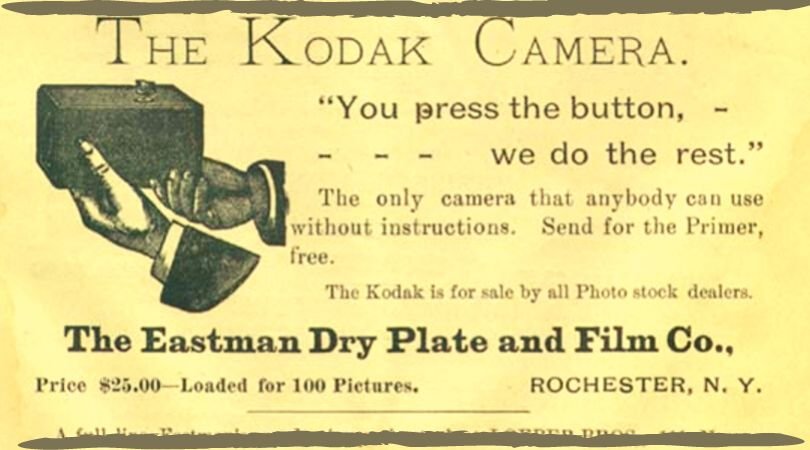
An early Kodak advertisement from the Eastman Dry Plate and Film Co. The camera sold for $25.00, loaded for 100 pictures.
In 1888, George Eastman introduced a small box camera with a slogan that sounded almost like a conjuring trick: You press the button, we do the rest. He meant it literally. Once the roll was finished, the owner mailed the entire camera back to the company. Kodak developed the film, made the prints, reloaded the camera and sent everything home.
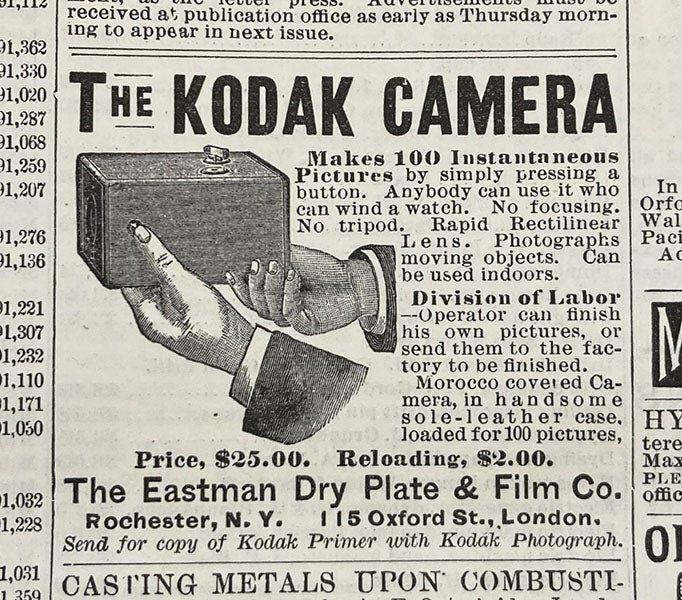
Another early advertisement. Under “Division of Labor,” owners could finish their own pictures or send them to the factory. Reloading cost $2.00.
The customer never handled the film, never saw the chemistry and never made a single technical decision. This was the genius of the business. Kodak was not simply selling cameras; it was selling the reassurance that someone else had taken care of everything.
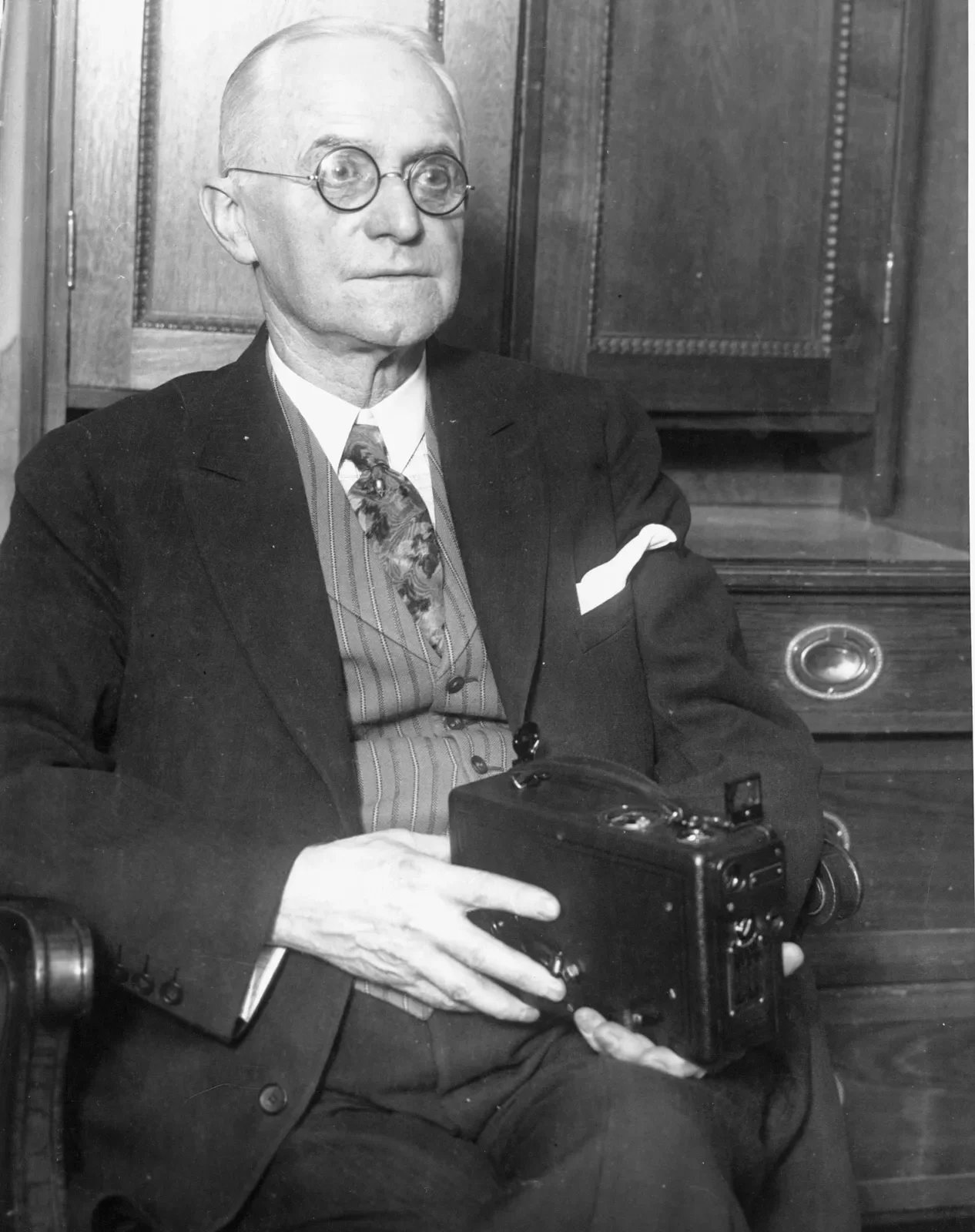
George Eastman, founder of Kodak, with one of his company's cameras.
That reassurance came at a price that no one noticed at first. Every choice about how a photograph should look was being made somewhere else, by someone else.
A PATIENT PHOTOGRAPH IN A DARK BOX

A film camera and a strip of 35mm film.
For a generation raised on phones, it helps to remember what a film camera actually is. It is a light-tight box with a lens to gather light, a shutter that opens for a fraction of a second, and a strip of film coated in light-sensitive chemicals.
When the shutter opens, light leaves an invisible trace on the film, known as a latent image. The picture exists, but no one can see it yet. It might be days or weeks before anyone knew what they had captured. Every frame was a small act of hope.
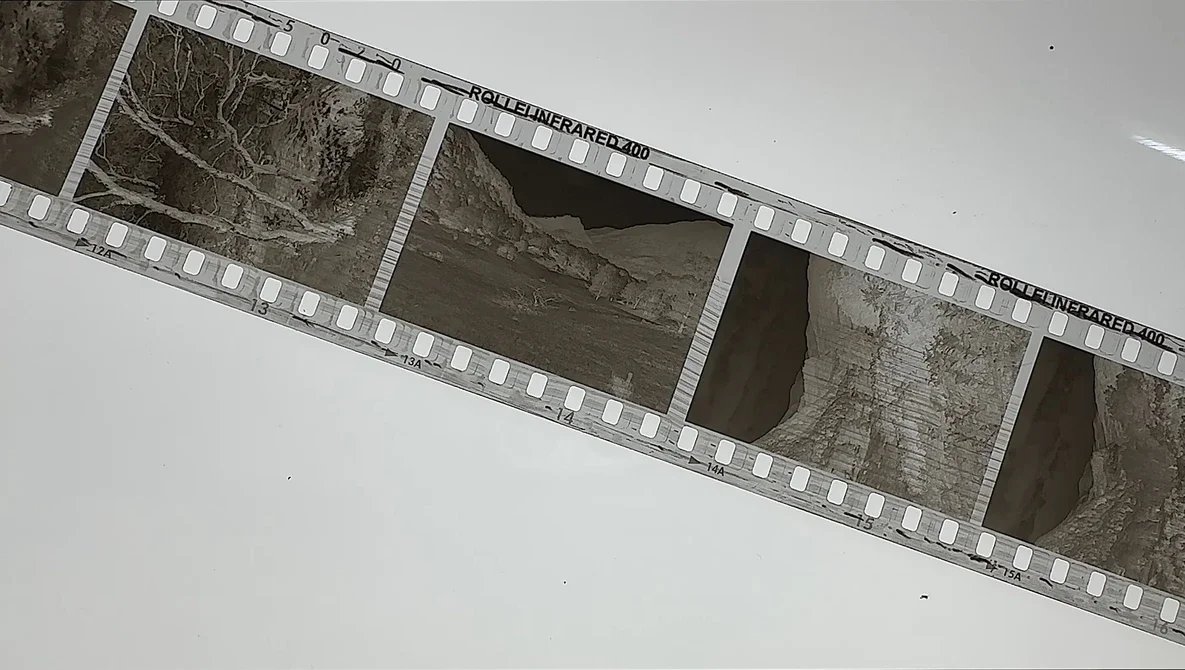
Developed negatives. Until the chemistry did its work, none of these images could be seen.
The second half of the camera, in other words, was the lab. And the lab's real work was colour.
THREE COLOURS, THREE DIALS
Turn over an old colour print from a family album and there is a fair chance the word Kodak is printed on the back. Every one of those images was built from just three colours.
Light works in red, green and blue. Printed dyes work in their opposites: cyan, magenta and yellow. The principle dates to 1861, when the physicist James Clerk Maxwell and the photographer Thomas Sutton produced a colour image of a tartan ribbon by photographing it through three coloured filters.

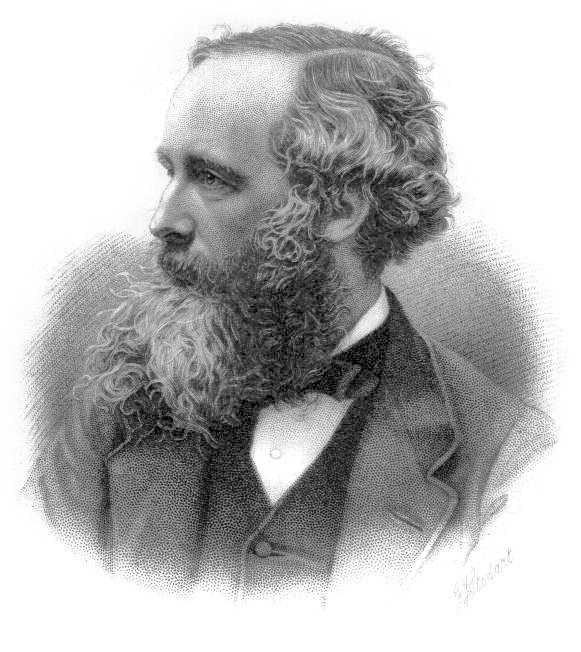
James Clerk Maxwell, and the tartan ribbon of 1861, the first colour photograph made by the three-colour method.
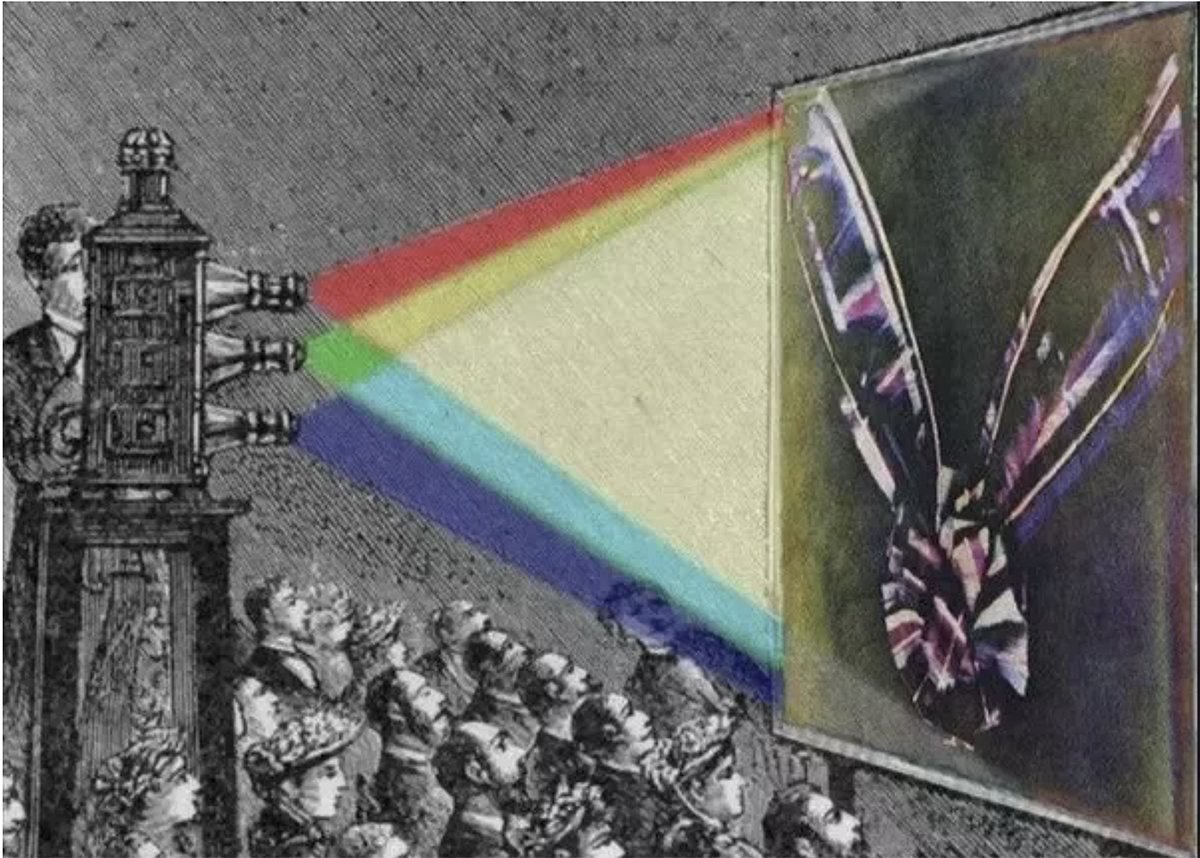
The idea behind the demonstration: three images, each projected through its own coloured filter, combine on the screen into one colour picture.
The logic has outlived the darkroom. Open any photo-editing app and the colour sliders come in pairs: red against cyan, green against magenta, blue against yellow. Push one and you pull the other. These are the same three dials a lab technician turned in the 1950s. Colour theory is not art-school trivia; it is the hand on the dial every time we edit an image.
WHEN THE DIALS CHANGED HANDS
In the early 1950s, the price of Kodak colour film included its processing. Customers shot a roll, mailed it to Kodak and received their slides or prints from Kodak's own labs. With roughly 90 per cent of the American colour film market, the company controlled not only the film but everything that happened to it afterwards.
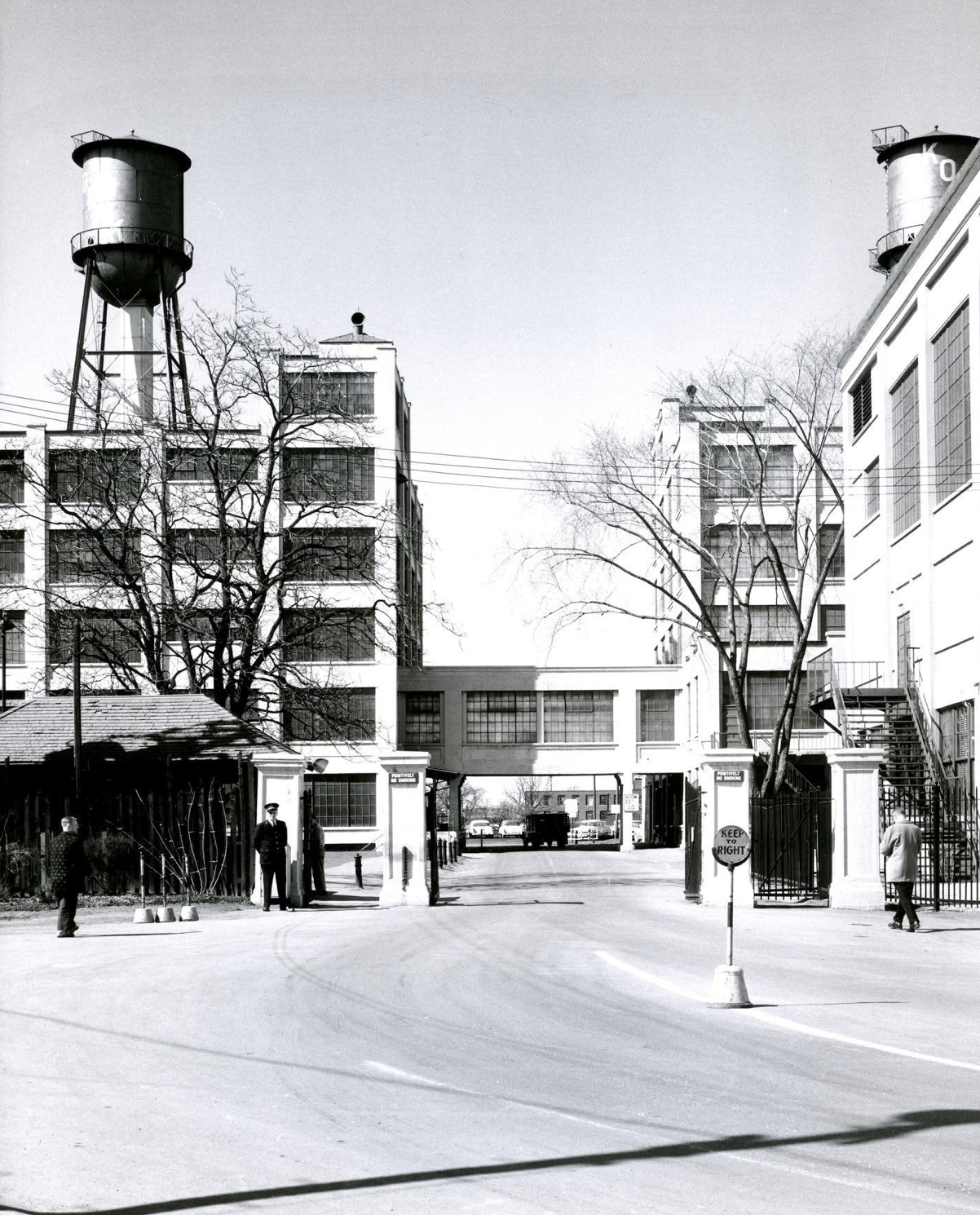
Kodak Heights gates, mid-twentieth century.
The United States Department of Justice considered this a monopoly. No independent lab could compete for the work, because customers had already paid Kodak to do it. Under a 1954 settlement, Kodak agreed to sell film and processing separately and to license its processing methods to others.
Overnight, independent labs could develop Kodak film, but they had never done it before. They needed to match Kodak's colour exactly. And every one of them faced the same question: how do you know the colour is right? Above all, how do you know the skin is right? People notice a wrong face long before they notice a wrong sky.
THE ANSWER KEY
Kodak's solution was a reference photograph: a portrait of a woman, printed on a card and sent to labs with their equipment. A technician printed the card, studied the woman's face and adjusted the three dials until she looked right. Then every customer's photographs were printed to the same settings.
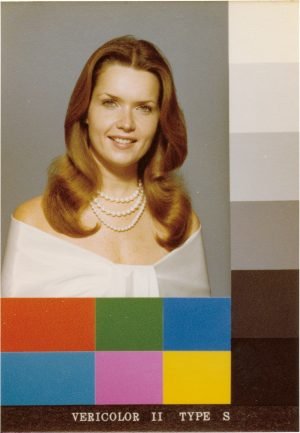
A Kodak reference card for Vericolor II Type S film: a face, a grey scale and colour patches for checking prints.
The first of these women was Shirley Page, a studio model employed by Kodak. Later cards featured other models, but the name stayed, and the reference images became known simply as Shirley cards. Why she was chosen is not recorded in any source I could find.
What is recorded is the outcome. As the communications scholar Lorna Roth has documented, Kodak's customers at the time were overwhelmingly white, and its film and printing standards were tuned to white skin. Shirley was never really a face. She was an answer key. A tool for checking colour quietly became a definition of what normal looks like.
A tool for checking colour quietly became a definition of what normal looks like.
FILM HAS OPINIONS
The card was only half the story. The other half lived inside the film itself.
Colour film is a sandwich of three light-sensitive layers, one for each primary colour of light, each with dyes that govern how strongly it responds. Kodachrome arrived in 1935; Kodacolor, for prints, followed in 1942. Every film stock was engineered to look a certain way: which colours sing, which stay quiet, how much detail survives in the shadows.
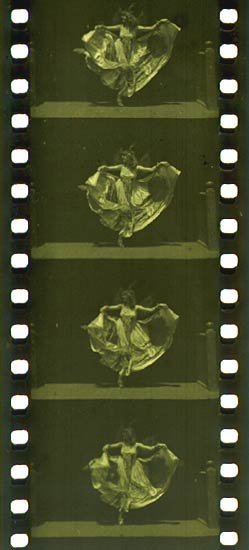
Frames from an early motion picture film strip.
A film that renders pale skin in beautiful detail can swallow the detail in darker skin. Not because darker skin is difficult to photograph, but because the film was designed around one kind of face. The limitation was a decision, not a law of nature.
Eastman's slogan comes back with a different weight. We do the rest. The rest, it turns out, included deciding whose face counted as the standard.
CHANGED BY CHOCOLATE
When Kodak's film finally improved, the pressure came, by most accounts, not from people but from products.
In the 1960s and 1970s, chocolate makers sold through magazine advertisements, packaging and catalogues. Furniture manufacturers relied on glossy showroom brochures. For both, the product was essentially a shade of brown, and on Kodak film those browns collapsed. Dark and milk chocolate printed as the same muddy block; the swirl of a truffle and the sheen of a broken square disappeared.
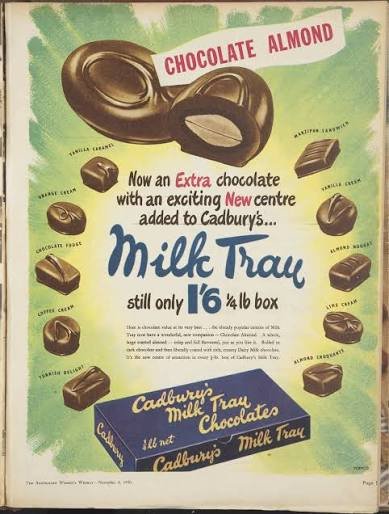
A Cadbury's Milk Tray advertisement from the 1950s, printed in The Australian Women's Weekly. Each chocolate is sold on its own shade of brown.
Furniture fared worse. Walnut, mahogany and teak, woods with very different prices, came out as the same dark slab, and the grain that customers were paying for vanished. An expensive table looked cheap. A dessert looked unappetizing. For these companies, poor film meant lost sales.
So they complained, and unlike the people whose faces had been rendering badly for decades, they were commercial clients Kodak could not afford to ignore. Change came partly from inside the company. Jim Lyon joined Kodak in 1974 as a photographer in its photo tech division and research laboratories, and over a career that lasted until 2005 he helped shift how colour film was calibrated for skin. “I started incorporating black models pretty heavily in our testing,” he later told NPR, “and it caught on very quickly.” Slowly, the emulsions learned to hold detail in darker tones. When Kodak described the new film range internally, it praised the stock's ability to “photograph the details of a dark horse in low light.” A horse, not a person.
Systems often change when a flaw starts costing money, rather than when it starts hurting people.
NO VILLAIN REQUIRED
The hardest part of this story is that it needs no villain. A camera can be unfair without anyone intending it to be. All it takes is a business built around its main customers, and no one asking who has been left out.
Some people did ask. In the late 1970s, the filmmaker Jean-Luc Godard reportedly refused to use Kodak film on an assignment in Mozambique, calling it racist.
In 1970, two Black employees at Polaroid's headquarters in Cambridge, Massachusetts, the chemist Caroline Hunter and the photographer Ken Williams, noticed a mock-up of an identification card for South Africa's Department of Mines pinned to a company noticeboard. Their questions led to a troubling discovery: Polaroid's instant ID cameras were being used in apartheid South Africa's pass system.
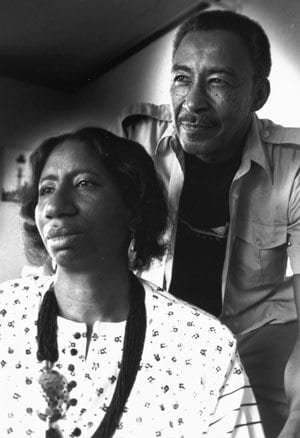
Caroline Hunter and Ken Williams in 1990. The former Polaroid employees launched an international boycott of the company over its role in apartheid South Africa. Photo: Banner file.
Under apartheid, every Black South African over the age of sixteen was required to carry a passbook, a photo document that controlled where they could live, work and travel. Being caught without it, or in the wrong area, meant arrest, and hundreds of thousands of people were arrested under the pass laws each year. The system depended on photographs, and Polaroid's fast, instant cameras made it run more efficiently.
Hunter and Williams founded the Polaroid Revolutionary Workers' Movement and called for an international boycott until the company left South Africa.
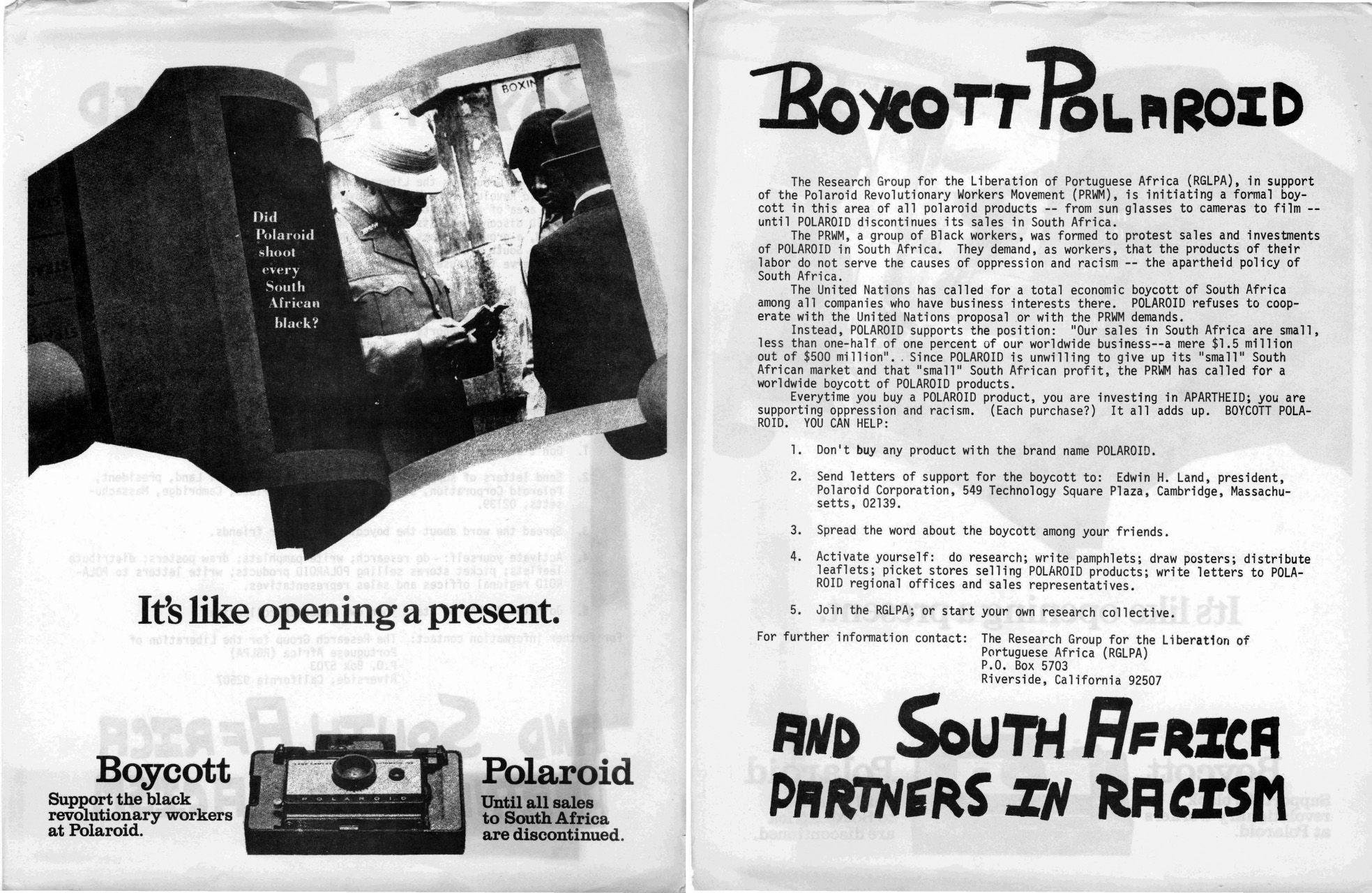
A boycott leaflet from the Research Group for the Liberation of Portuguese Africa, written in support of the Polaroid Revolutionary Workers' Movement. Its first page borrows the language of a camera advertisement, “It's like opening a present,” over a photograph of a passbook check.
One detail binds their story to Shirley's. Polaroid's ID-2 camera reportedly included a “boost” button that increased the flash so that darker skin would register clearly. After decades of film that could not properly see Black faces, here was a camera designed to do exactly that, and one of its uses was helping a racist state identify and control Black citizens.
Polaroid did not leave at once. It promised reforms instead: no direct sales to the government, and better wages for its Black employees in South Africa. In 1977, it emerged that its local distributor had been supplying the government regardless, and Polaroid withdrew from the country that year. Caroline Hunter, by then, had already been fired.
Technology carries the values of those who build it, and of those who buy it.
THE OPINION IN YOUR POCKET
The problem did not end with film; it migrated into software. A phone camera makes thousands of decisions on our behalf: exposure, skin tone, how much to brighten a face. In 2021, Google introduced Real Tone with its Pixel 6, a set of camera adjustments designed to render darker skin more accurately. That such a feature needed to be announced at all says a great deal.
Every phone now carries two things: a camera and a point of view. Only one of them appears in the specifications. For anyone who photographs people, the lesson is practical. Meter for your subject, not for the average of the scene, and learn what your camera assumes before you trust what it shows you.
BACK TO SHIRLEY
Shirley was never the problem. She was a woman who took a job, sat for a portrait and went home. The problem was what an entire industry decided her face should mean.
You press the button, we do the rest. For most of the twentieth century, the rest included deciding what normal looks like. The more useful question, for photographers and for everyone who looks at photographs, is who gets to decide it now.
SOURCES
Kodak and the first snapshot cameraDuke University Libraries: Ellis Collection of Kodakiana, the 1888 Kodak cameraU.S. Department of Justice: Brief in United States v. Eastman Kodak Co. (1994), on the 1954 consent decreeColourJames Clerk Maxwell Foundation: First Colour Photographic Image by MaxwellShirley cards and the filmLorna Roth: Looking at Shirley, the Ultimate Norm. Canadian Journal of Communication 34, no. 1 (2009)NPR: For Decades, Kodak's Shirley Cards Set Photography's Skin-Tone Standard (2014)Aperture: Adam Broomberg & Oliver Chanarin, To Photograph the Details of a Dark Horse in Low LightPolaroid and apartheidScience Friday: Ainissa Ramirez, How Two African-American Employees Exposed Polaroid's Role in Apartheid South Africa (2020)African Activist Archive, Michigan State University: Polaroid Revolutionary Workers MovementCarleton College: Object Lessons, Polaroid ID-2Phone camerasGoogle: Image equity, Making image tools more fair for everyone (2021)